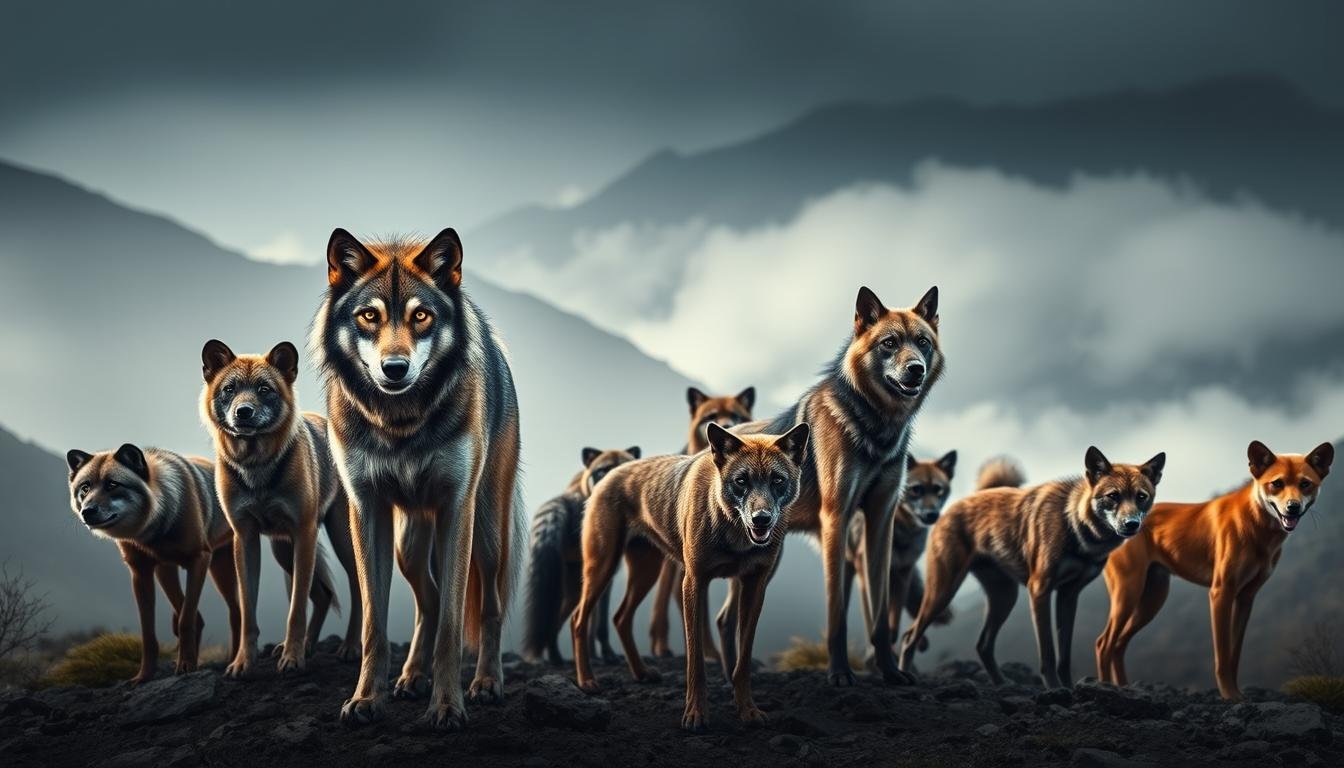
Did you know some dog breeds are so unique and fascinating they seem like they belong in a wildlife documentary? These dogs have special traits that make them different from other dogs. Dogs come in all sizes, from the tiny Chihuahua to the huge Great Dane. Some breeds are special because of their exceptional traits and abilities. They are truly amazing.
Key Takeaways
- Some dog breeds exhibit unique characteristics that make them stand out.
- Fascinating canine breeds have evolved with distinct traits.
- These breeds offer a glimpse into the diversity of the canine world.
- Understanding these breeds can enhance appreciation for their uniqueness.
- Exploring these breeds can be a fascinating journey for dog enthusiasts.
The Fascinating World of Wild Canines
Exploring the world of feral canines shows us many different species. Each one has its own special traits. For centuries, humans have been amazed by their beauty and complex ways of acting.
What Defines a Wild Dog
A wild dog can live and grow strong in the wild, all by itself. Feral canines, like the Dhole and the African Wild Dog, are great hunters. They also have strong bodies to help them survive.
- Sharp instincts for survival
- Complex social structures
- Adaptability to various environments
The Appeal of Untamed Canine Companions
Wild canines are fascinating because of their wild nature. People love their intelligence, social complexity, and the challenges they face. It’s interesting to see how they live in the wild.
Learning about these wild dog species helps us appreciate nature more. It also encourages us to help protect it.
The Wildest Dogs: A Comprehensive Review
Wild canines show a complex classification system. This reflects their adaptability and intelligence. They are divided into various species based on their history, physical traits, and behavior.
Classification of Wild Canine Species
Wild canines include wolves, dingos, and African wild dogs. Each species has unique physical and behavioral traits. For example, the African wild dog is known for its colorful coat and social behavior.
Evolutionary Adaptations
Wild dog breeds have evolved remarkable adaptations. Some have strong predatory instincts. Others have adapted to harsh environments with limited resources.
Wild Dog Intelligence and Social Structures
Many wild dog breeds are highly intelligent. They live in complex social structures. For example, wolf packs have a hierarchical structure. African wild dogs are known for their cooperative hunting.
| Wild Dog Breed | Key Characteristics | Social Structure |
| African Wild Dog | Colorful coat, highly social | Pack-based, cooperative hunting |
| Dingo | Adaptable, opportunistic | Solitary or pack-based |
| Wolf | Highly intelligent, predatory | Hierarchical pack structure |
Understanding wild dog breeds is key. It helps us appreciate their role in nature. It also supports conservation efforts.
African Wild Dog: The Painted Hunter
The African Wild Dog is one of the most interesting dogs in the world. It has a colorful coat and lives in groups. This makes it a favorite among wildlife fans and those who want to save animals.
Overview
The African Wild Dog, also called the Painted Hunter, shows how diverse nature is. Its unique coat pattern makes every dog look different.
Physical Characteristics
African Wild Dogs have slender bodies and large ears. These features help them hunt and stay cool. Their coats are full of colors, which is why they are called the “Painted Hunter.”
Habitat and Distribution
These dogs live in sub-Saharan Africa. They like savannas and grasslands. They can be found in countries like South Africa, Botswana, and Tanzania.
Pros of African Wild Dogs
African Wild Dogs are great hunters. They catch more prey than many other animals. They also live in complex groups, which is interesting to watch.
Cons and Conservation Challenges
Despite being good hunters, African Wild Dogs face many problems. They lose their homes and have conflicts with people. Saving these untamed canine companions is very important.
Viewing Recommendations
If you want to see African Wild Dogs in the wild, go to national parks in South Africa and Botswana. There, you can join guided tours. These tours let you see these animals up close.
Dingo: Australia’s Iconic Wild Canine
The Dingo is a wild dog that is a symbol of Australia. It is interesting to study, with its origins and traits fascinating many. Scientists and dog lovers find it captivating.
Overview
The Dingo, or Canis lupus dingo, came from domestic dogs in Australia thousands of years ago. It has adapted to the wild, showing unique physical and behavioral traits.
Physical Characteristics
Dingos have sandy-yellow coats that help them blend into the outback. They are lean and athletic, built for running and hunting. Their looks show their wild nature and ability to survive in tough places.

Dingo physical characteristics
Dingos are social animals that live in packs with a strict order. They are skilled hunters, going after small to medium-sized prey. Their behavior is a mix of wild instinct and complex social interactions.
Pros of Dingo Conservation
Keeping Dingos safe is key to Australia’s ecological balance. As top predators, they control other animals’ populations, protecting the habitat.
Cons and Human Conflicts
Despite their importance, Dingos sometimes clash with human interests, like in farms. This has made their conservation a big challenge.
Viewing and Research Opportunities
For those wanting to see Dingos in the wild, some national parks and sanctuaries in Australia offer tours. There are also many research chances, with scientists studying their behavior, genetics, and ecology.
| Characteristics | Description | Conservation Implication |
| Physical Adaptability | Lean, athletic build | Ability to survive in harsh environments |
| Social Structure | Pack dynamics with strict hierarchy | Complex social behavior to study and understand |
| Hunting Behavior | Skilled hunters of small to medium prey | Important role in controlling prey populations |
Wolf-Like Breeds: Domesticated Yet Wild
For those who love feral canines, some dog breeds are a mix of wild charm and friendship. These wolf-like dogs are popular for looking like their wild relatives. They show the beauty and challenges of their wild past.
Czechoslovakian Wolfdog
Overview and Characteristics
The Czechoslovakian Wolfdog is a mix of a German Shepherd and a Carpathian Wolf. It has the strength and smarts of wolves and the loyalty of dogs. They need lots of exercise to stay healthy in body and mind.
Pros and Cons as Companions
Czechoslovakian Wolfdogs are very loyal and can bond strongly with their families. But, they’re not for everyone because of their high energy and need for experienced owners. Pros are their smartness and trainability. Cons include their tendency to be destructive if not kept busy and mentally stimulated.
Saarloos Wolfdog
Overview and Characteristics
The Saarloos Wolfdog is a mix of a European Wolf and a German Shepherd. It’s known for being quiet and having strong pack instincts. Early socialization is key for them.
Pros and Cons as Companions
Saarloos Wolfdogs are very loyal and gentle with their families. But, they can be shy around strangers and might try to escape. The key advantages are their unique looks and loyalty. But, they need careful handling and socialization.
Ownership Recommendations
If you’re thinking about getting a wolf-like dog, do your homework first. You’ll need to spend time training, socializing, and exercising them. Also, check local laws about owning exotic or wolf-hybrid dogs. Laws can change a lot.
Primitive Asian Breeds with Wild Instincts
Primitive Asian dog breeds give us a peek into the wild world of canines. These dogs keep much of their wild side, showing us the untamed spirit of dogs.
New Guinea Singing Dog
Overview and Unique Traits
The New Guinea Singing Dog is rare and special, known for its haunting howls. It’s agile, smart, and has strong survival instincts. This makes it a wild dog species that’s truly captivating.
Unique Characteristics:
- Distinctive howling ability
- High agility and intelligence
- Strong prey drive and survival instincts
Pros and Cons
Having a New Guinea Singing Dog can be rewarding. They’re smart and can learn commands well. But, their high energy and strong prey drive can be tough for new owners.
“Their howling is not just a form of communication; it’s an expression of their wild nature.”
Korean Jindo
Overview and Characteristics
The Korean Jindo is known for its loyalty and hunting skills. It comes from Jindo Island in Korea. This breed is medium-sized, has a wedge-shaped head, and erect ears.

wild dog species
Korean Jindos are very loyal and bond strongly with their owners. But, they can be shy with strangers and need regular training.
| Trait | New Guinea Singing Dog | Korean Jindo |
| Loyalty | Moderate | High |
| Energy Level | High | Medium |
| Trainability | High | Moderate |
Ownership Considerations
Choosing a primitive Asian breed like the New Guinea Singing Dog or Korean Jindo is big. You need to understand their wild side and what they need. Owners must be ready to give them lots of exercise, training, and socialization.
It’s key to know what these breeds need to have a good and healthy relationship.
Northern Sled Dogs: The Untamed Workers
Northern sled dogs come from very cold places. They have special traits that help them survive in tough weather. Breeds like the Siberian Husky and Alaskan Malamute show what it means to be a aggressive dog breed from the wild.
Siberian Husky
Overview and Wild Traits
The Siberian Husky keeps many wild traits, making it a great pet for those who know dogs well. They were bred to pull sleds in the Arctic. Huskies are known for their long-lasting energy and pack mentality.
They need lots of exercise to stay healthy in body and mind. Their thick fur and strong body show they come from the cold Siberian lands.
Pros and Cons as Pets
Having a Siberian Husky as a pet has its good sides. They are smart, loyal, and loving. But, they can be hard to train because they like to do things their own way. Their high energy might not fit every home.
- Pros: Intelligent, loyal, affectionate
- Cons: Difficult to train, high energy
Alaskan Malamute
Overview and Wild Traits
The Alaskan Malamute also shows the wild spirit, with a strong prey drive and sturdy build. They were used for heavy work and as friends. Malamutes are known for their power and resilience.
They have thick fur that needs regular grooming. They are calmer than Huskies but also need regular exercise.
Pros and Cons as Pets
Alaskan Malamutes are loyal and gentle with their family. But, they can be hard to handle because of their size and strength. They might not be the best choice for new dog owners.
- Pros: Loyal, gentle
- Cons: Large size, strong will
Ownership Recommendations
If you’re thinking about getting a Siberian Husky or Alaskan Malamute, you need to know what they need. Both breeds need owners who can give them lots of exercise, training, and care.
It’s important to find good breeders and be ready to spend time and money on your dog’s health.
Living with Wild-Natured Dogs: Essential Guidelines
If you’re interested in untamed canine companions, you must understand the responsibilities. Living with these dogs can be rewarding but requires careful thought and a deep understanding of their needs.
Training Approaches for Wild Temperaments
Training a wild-natured dog needs patience, consistency, and positive reinforcement. It’s important to set clear boundaries and socialize them well to fit into home life.
Exercise and Containment Requirements
Wild-natured dogs have lots of energy and need plenty of exercise and space. They must be kept safe to prevent escape and protect both the dog and the community.

Legal and Ethical Considerations
Before getting a wild-natured dog, check local laws on exotic pets. Think about the dog’s welfare and how it might affect local ecosystems.
Finding Reputable Breeders
When looking for a wild-natured dog, find a breeder who cares about the animal’s well-being. They should be open about the dog’s background, health, and personality.
| Key Considerations | Description |
| Training | Patience, consistency, and positive reinforcement |
| Exercise | High energy levels, ample space, and secure containment |
| Legal and Ethical | Research local laws, consider animal welfare and ecosystem impact |
| Reputable Breeders | Prioritize animal welfare, transparent about ancestry, health, and temperament |
Conclusion: Respecting the Wild Spirit
As we wrap up our look at the wildest dogs, it’s clear their wild spirit is precious. We’ve seen breeds like the African Wild Dog and the Siberian Husky. They show us what it means to be truly wild.
These breeds amaze us with their special traits. They also teach us why we must protect their wild side. By understanding their instincts, we can take better care of them.
Going forward, we must keep valuing the wild spirit in these dogs. This way, we can build a stronger bond with them. And we can live in harmony together.
Sources
- World Wildlife Fund: African Wild Dog
- IUCN Red List: African Wild Dog
- Australian Museum: Dingo
- American Kennel Club: Siberian Husky
FAQ
What are considered wild dogs?
Wild dogs are feral canines and untamed canine companions. They have not been domesticated or have gone back to living in the wild.
Are aggressive dog breeds considered wild?
Some aggressive dog breeds might show wild traits. But not all aggressive breeds are wild. Wild dogs are not domesticated and live in the wild.
Can I keep a wild dog as a pet?
Keeping a wild dog as a pet is hard and not always recommended. Wild dogs need complex social and spatial needs that homes can’t provide. They might also be a risk to people’s safety.
What are some examples of wild canine species?
Wild canine species include the African Wild Dog and the Dingo. Also, wolf-like breeds like the Czechoslovakian Wolfdog and Saarloos Wolfdog are examples.
How can I view wild dogs in their natural habitat?
To see wild dogs in their natural habitat, visit national parks or wildlife reserves. Places like the African savannas for African Wild Dogs or the Australian outback for Dingos are good options.
What are the conservation challenges facing wild dog populations?
Wild dog populations face many challenges. These include habitat loss, human-wildlife conflict, disease, and competition with other predators.
Can I own a wolfdog or other wolf-like breed?
Owning a wolfdog or wolf-like breed is challenging. It depends on local laws and regulations. These animals need special care and housing, and owning them is often restricted or banned.